THE FIRST CHRIST
Was the first “Christ” in history a woman?Centuries before the rise of Christianity, Ancient Greek texts describe a powerful figure who prepared sacred compounds, performed transformative rites, and was associated with salvation and deliverance.Her name was Medea.This website explores ancient sources that describe Medea as a master of pharmaka, drugs, medicines, and ritual substances and asks a provocative question:Could Medea represent the earliest example of a technical “christos” in recorded history?To explore that idea, we must go back to the original Greek language and the ancient world in which these stories were written.The investigation begins with a simple question:What did the word “Christ” originally mean?
1 of 11
The Meaning of “Christ”
Today the word Christ is almost always associated with Jesus.But the term itself is Greek and existed long before Christianity.The Greek verb:χρίω (chriō)
means to anoint, smear, or apply a substance.From this verb comes the title:χριστός (christos)
meaning “the anointed one” or “one who performs anointing.”In the ancient world, anointing was not only symbolic. It often involved the application of oils, salves, and compounds with medicinal or ritual significance.To understand how such substances were prepared and used, we must look at another important Greek word.φάρμακον (pharmakon).
2 of 11
Pharmaka: Drugs in the Ancient World
The Greek word φάρμακον (pharmakon) is difficult to translate with a single English word.Depending on context it could mean:medicine, poison, drug, magical compound, healing substanceAncient physicians and pharmacologists studied these substances carefully.Among the most important writers were:Dioscorides & GalenTheir works catalog hundreds of plants, minerals, and compounds used to alter the body.Knowledge of pharmaka could heal, harm, transform, or intoxicate.In Greek myth and literature, certain figures were famous for mastering this knowledge.One of the most powerful among them was Medea.
3 of 11
Medea: Master of Pharmaka
In Greek literature, Medea is repeatedly described as a technical expert in pharmaka.Ancient writers portray her as someone who could:prepare powerful compounds, heal wounds, induce altered states,
manipulate poisons and antidotesHer abilities are emphasized by major authors including:EuripidesApollonius of RhodesDiodorus SiculusIn these sources, Medea’s power comes not from brute force but from knowledge.Πίνδαρος, Πυθιόνικος Δʹ (Pyth. 4), vv. 220–223
ἣ δ᾿ ὠκὺν ἔφρασεν πῶς ἔργα τελέσσαι· καὶ φάρμακα σὺν ἐλαίῳ μίξεν ἀλγινόεντα κακῶν ἄκος, καί μιν ἔχρισεν· ὁμολογήσαντο δ᾿ ἀλλήλοις γλυκὺν γάμον.Pindar's Fourth Pythian Ode 220-223 (462BCE)
“And she (Medea) swiftly revealed how to accomplish the tasks; and she mixed drugs (φάρμακα) with olive oil, a remedy for grievous pains, and she christed (ἔχρισεν) him with it; and they agreed with each other to a sweet marriage.”She understands substances, rituals, and transformations that others do not.But one ancient historian preserves an especially intriguing account of Medea performing a ritual that transformed an entire city.
4 of 11
The Rite of Medea
The Greek historian Diodorus Siculus, writing in the first century BCE, preserves one of the most remarkable accounts associated with Medea.He describes Medea creating an image of the goddess Artemis, filling it with powerful substances, disguising herself as an old woman, and carrying the image into the city. As the ritual unfolds, the people are overcome with divine fear and enter a state of ecstatic worship.Through this ceremony, Medea establishes herself not simply as a healer or priestess, but as the founder of a new sacred rite capable of transforming those who participated.This ceremony marks the beginning of what would become known throughout the ancient Mediterranean as The Mystery. For nearly 1600 years, Mystery traditions spread throughout the Greek and Roman world.At Eleusis, Samothrace, the Dionysian sanctuaries, and countless local cults, initiates underwent carefully structured ceremonies that promised purification, hidden knowledge, personal transformation, and passage through death into new life.At the heart of this tradition was a carefully controlled pharmacological process: a death-inducing substance followed by an antidotal restoration, allowing the initiate to undergo what was experienced as a genuine death-and-resurrection rite.The rites were guarded by strict vows of secrecy. Those who participated were forbidden from revealing what they had seen or experienced under the threat of death, leaving historians with only scattered glimpses of ceremonies that shaped the spiritual lives of the ancient world for over a millennium.If Medea truly stands at the beginning of this tradition, then she is not simply a sorceress or a tragic queen, but the earliest known founder of The Mystery, a sacred tradition that shaped the spiritual landscape of the Mediterranean for over sixteen centuries and whose echoes are still found in today's religions.This brings us to another ancient title closely connected with healing, deliverance, and salvation:Sōtēra (Σωτῆρα).
5 of 11
Sōtēra: The Female Savior
In Greek religion the title:
Σωτήρ (Soter)
means savior or deliverer.The feminine form is:
Σώτειρα (Sōteira).Note: While Σώτειρα (Sōteira) is the standard Attic spelling, Σωτήρα (Sōtēra) reflects the Old Dorian dialect associated with the island of Thera, where Medea delivered her oracles.
This website will use Sotera.This title was used for gods, heroes, and rulers believed to protect or save their people.Figures associated with healing, protection, and deliverance were often given this name.In many traditions, Medea appears as a healer and rescuer - someone capable of reversing death, restoring youth, and delivering people from danger through her knowledge of pharmaka.These themes connect her story to broader traditions of salvation and transformation.But Medea’s influence may extend even further into ancient history.Some Greek writers preserved a remarkable tradition about the origin of an entire people.
6 of 11
The Medes and Medea
The Greek historian Herodotus recorded traditions about the origins of many ancient peoples.Herodotus, Histories 7.62 (5th c. BCE):
οἱ γὰρ Μῆδοι πρότερον μὲν ἐκαλέοντο Ἄριοι· μετωνομάσθησαν δὲ ἀπὸ Μήδειαν τὴν Αἰήτεω, ἐπείτε ἐς σφέας ἀφίκετο ἀπὸ Ἀθηναίων.“The Medes were formerly called Aryans, but they changed their name to Medes from Medea, daughter of Aeëtes, when she came to them from the Athenians.”Her name appears in stories that stretch from Greece to the Black Sea and beyond.These stories were already ancient by the time they were written down.
7 of 11
Medea and the Origins of Medusa
Medusa may have started as a real historical figure:
Medea.Ancient stories describe Medea as a powerful priestess, healer, and expert in pharmaka.She was also connected to the Scythians, fierce horse-riding warriors from the lands north of the Black Sea, these woman were most often associated with the historical origins of the Amazonian woman.These Scythian women warriors were famous for fighting with bows and arrows coated in powerful poisons. Through repeated exposure, they are said to have developed an induced immunity to many venoms. According to ancient accounts, they kept their hair damp with poison and, before releasing an arrow, would draw it through their hair to coat the tip. Ancient writers describe these toxins as causing paralysis, intense pain, and death.Over time, stories of warriors left seemingly "frozen" after being struck by these poisoned arrows may have evolved into the legend of Medusa, whose gaze could turn people to stone.Medusa's terrifying image, with snakes, death, and deadly power, may preserve memories of Medea herself and her feared Scythian bodyguards, transformed through centuries of retelling into Greek myth.To understand how these ideas developed, it helps to see them placed on a timeline.
8 of 11
TIMELINE
1200–800 BCE
Mythic traditions about Medea circulate in the Greek world700 BCE
Hesiod records genealogies including Medea and references Medusa5th century BCE
Greek tragedies such as Euripides’ Medea develop her story3rd century BCE
Apollonius of Rhodes writes Argonautica1st century BCE
Diodorus Siculus records Medea’s ritual traditions1st century CE
Christian texts introduce the title “Christos”Across these centuries, Medea remained one of the most powerful figures associated with pharmaka and transformation.Medea represents an early form of the technical christos, one who performs anointing and transformation through substances.
9 of 11
MEDEA AND HER ERASURE
Today, many people know Medea through a single story:The tale in which she murders her own children.This version comes from the famous tragedy written by Euripides in 431 BCE.In that play, Medea becomes one of the most terrifying figures in Greek literature - a woman driven by rage who kills her children to punish Jason.For many centuries, this version of Medea became the dominant one.But it was not the only version of the story.---Several ancient writers preserve different accounts.Some sources report that the Corinthians themselves killed the children, not Medea.Later writers, including the geographer Pausanias, mention traditions in Corinth that blamed the deaths on the city’s inhabitants rather than Medea.In these versions, Medea was not the murderer but the victim of a political or social tragedy.---Why would Medea’s story change so dramatically?Ancient myth was never fixed. Stories were reshaped by poets, playwrights, and political contexts.Euripides’ tragedy transformed Medea into a figure of extreme emotional and moral conflict. The shocking act of killing her own children made the drama unforgettable.But this powerful theatrical image may also have overshadowed older traditions that portrayed Medea very differently.---In many ancient texts, Medea appears as a woman with extraordinary knowledge:* mastery of pharmaka
* ritual expertise
* healing and transformationSuch figures often occupy a dangerous space in mythology.
Their power inspires both awe and fear.Over time, stories about powerful figures can shift -
sometimes elevating them, sometimes demonizing them.Whether Medea was remembered as healer, sorceress, savior,
or villain depended on the storyteller.---The Medea we encounter today may therefore be a composite
of many traditions layered over centuries.Behind the tragedy, there may remain traces of a much older memory:A woman whose knowledge of pharmaka and ritual made her
one of the most formidable figures of the ancient world.
10 of 11
GO FURTHER DOWN THE RABBIT HOLE
What follows is a curated path deeper into the material. The audio and video are arranged in a suggested order to help the ideas unfold with greater clarity.
The perfect entry point into this subject is a 2018 lecture by Dr. Ammon Hillman.Dr. Hillman is an American classicist and author of The Chemical Muse: Drug Use and the Roots of Western Civilization (2008). He taught at Immaculate Heart of Mary Seminary and holds a BA in Classics from the University of Arizona, and has an MS in bacteriology and an MA and PhD in Classics, with a focus on Ancient Greek and Roman pharmacy.Listen to both parts below.Note: During the Part 2 Q&A, Renowned scholar of ancient mystery traditions, Dr. Carl A. P. Ruck, Professor at Boston University and co-author of "The Road to Eleusis," speaks to Dr. Hillman’s work, noting that he has "...I've been following Ammon's work for a long time, I've been checking all his sources and he is right on the mark..."
PART 1
PART 2 (Q&A)
The Sacred Speaks Podcast
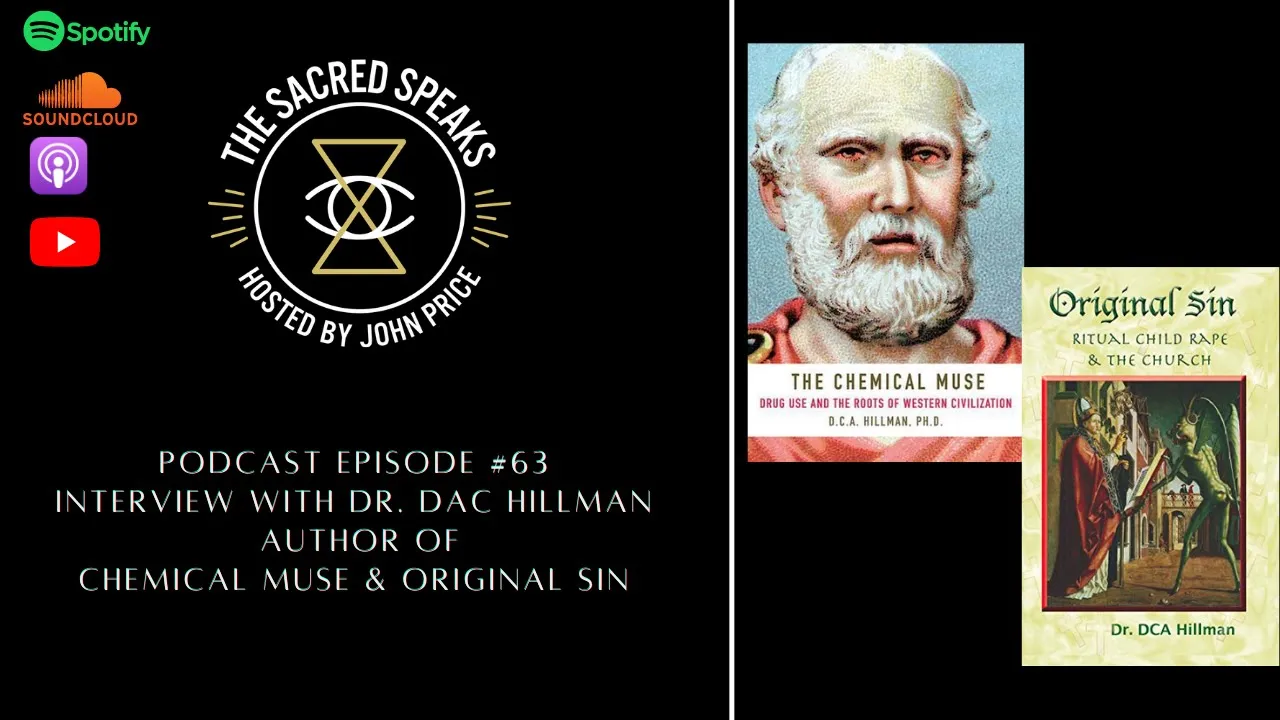
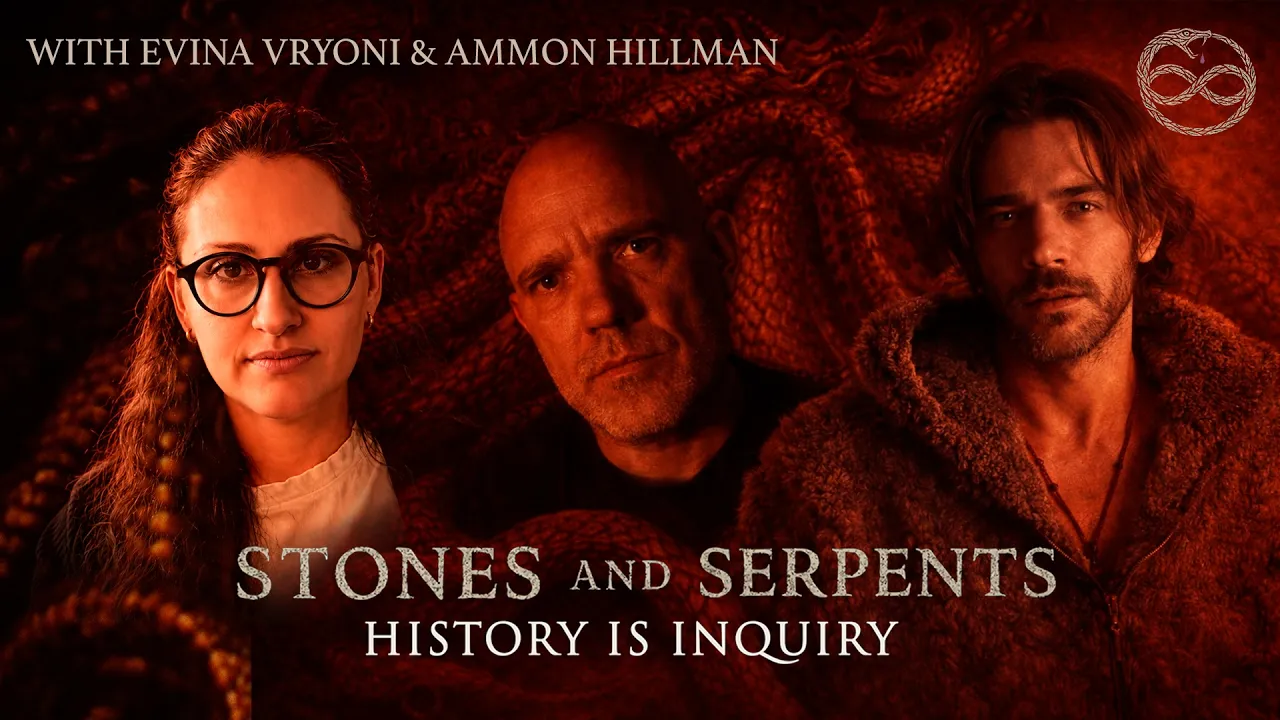
This team is producing a documentary exploring the translations and interpretations presented by Dr. Ammon Hillman, featuring a variety of interviews that help provide historical, linguistic, and cultural context for the work.The videos above are excellent. The first features Evina Vryoni in conversation with Dr. Hillman, resulting in a fascinating exchange of ideas between two scholars. The second focuses solely on Dr. Hillman and is packed with thought-provoking and often jaw-dropping information.
You should subscribe to this channel.
Dr. Hillman on Danny Jones (this video went viral)

Once you have a basic foundation, you can begin your initiation, an ascent into Lady Babylon, the YouTube archive of Dr. Ammon Hillman.Start with Episode 1 below.What follows is over 200 hours of dense, esoteric exploration - language, ritual, and translations of ancient texts that challenge conventional understanding. It’s not structured as a course, but as a descent (or ascent) into a body of work that reveals itself over time.The "Hail Satan" is intentional. It serves as a threshold - filtering out rigid belief systems and preparing the listener for a different mode of reading and thinking. Not a declaration, an inversion.To follow the progression as intended:
Go to the “Live” tab on the channel and sort by oldest.

The Soma Library is an online archive dedicated to preserving Dr. Ammon Hillman’s translations, presenting the original Ancient Greek alongside accessible interpretations for deeper study.It traces the roots of religious and philosophical traditions through ancient mystery systems, early cult practices, and pharmakon use, while examining cultural erasure, the “antichrist,” and the preservation of intellectual legacy. A vast body of knowledge lives here.Constantly expanding, it remains an invaluable resource.
A beautifully designed website you can easily lose yourself in, featuring the Soma Library alongside a growing collection of articles, ancient texts, research, translations, and other resources exploring the ancient world.